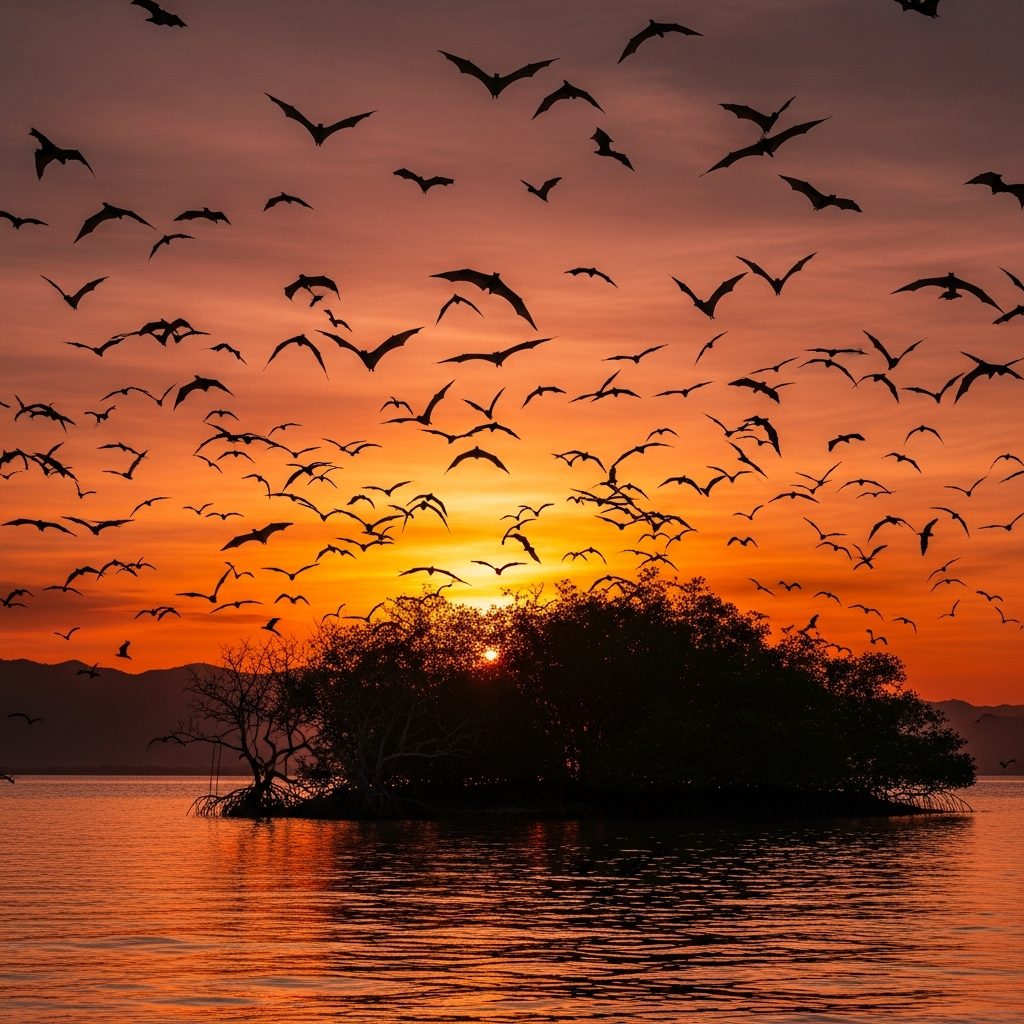
Witness Thousands of Flying Foxes at Sunset
Kalong Island
Kalong Island, meaning ‘Bat Island’ in Indonesian, offers one of the most unique wildlife spectacles in Komodo National Park. Every evening at sunset, thousands of large fruit bats (flying foxes) emer
About Kalong Island
Kalong Island, meaning ‘Bat Island’ in Indonesian, offers one of the most unique wildlife spectacles in Komodo National Park. Every evening at sunset, thousands of large fruit bats (flying foxes) emerge from the mangrove forests and take flight across the darkening sky in search of food on neighboring islands.
The spectacle begins approximately 30 minutes before sunset, when the first bats start stretching and preparing for flight. As the sun drops toward the horizon, the sky fills with enormous silhouettes — flying foxes with wingspans up to 1.5 meters stream overhead in an endless river of black shapes against the orange and purple sunset sky.
Liveaboards anchor near the mangrove-covered island at dusk, positioning guests on the sun deck with unobstructed views of the bat exodus. The experience is accompanied by the sounds of the bats’ calls and the gentle lapping of water against the hull — a truly magical Komodo evening experience.
Highlights & Activities
Natural Beauty
Experience the stunning landscapes and pristine waters that make Kalong Island a must-visit destination in Komodo National Park.
Marine Life
The waters surrounding Kalong Island are rich with coral reefs, tropical fish, and frequent encounters with larger marine species.
Liveaboard Access
Best accessed by liveaboard, Kalong Island is included in our carefully designed sailing itineraries through Komodo.
Photography
From underwater scenes to dramatic landscapes, Kalong Island offers exceptional photography opportunities for all skill levels.
What to Do at Kalong Island
The spectacle begins approximately 30 minutes before sunset, when the first bats start stretching and preparing for flight. As the sun drops toward the horizon, the sky fills with enormous silhouettes — flying foxes with wingspans up to 1.5 meters stream overhead in an endless river of black shapes against the orange and purple sunset sky.
How to Get to Kalong Island
Kalong Island is accessible by liveaboard from Labuan Bajo as part of our Komodo National Park sailing itineraries. Contact our team to include Kalong Island in your custom itinerary.
Frequently Asked Questions
How do I get to Kalong Island?
Kalong Island is best accessed by liveaboard from Labuan Bajo. It is included in many of our standard 2-day, 3-day, and 4-day Komodo itineraries. Contact us to ensure Kalong Island is part of your sailing route.
What can I do at Kalong Island?
Activities at Kalong Island include snorkeling, swimming, photography, and exploring the natural environment. Specific activities vary by location — contact our team for detailed information about what each stop offers.
When is the best time to visit Kalong Island?
The best time to visit Kalong Island is during the dry season from April to November, when weather conditions are most favorable and visibility is at its best. However, Komodo can be visited year-round.
Visit Kalong Island on Your Liveaboard
Include Kalong Island in your custom Komodo liveaboard itinerary. Contact our team to design the perfect sailing route.
Best Time to Visit
The optimal time to visit Kalong Island depends on seasonal conditions and marine life patterns. The dry season from April to December offers the most favorable weather, with calm seas and excellent visibility for diving and snorkeling. During these months, water temperatures remain warm at 26-29°C, and rainfall is minimal, ensuring comfortable surface intervals between activities.
The wet season from January to March brings rougher seas and occasional rain, but fewer tourists and lower prices make it an attractive option for budget-conscious travelers. Marine life encounters vary throughout the year, with certain species more active during specific seasons. We recommend checking seasonal wildlife calendars when booking to maximize your chances of encountering your desired marine species.
What to Expect
A visit to Kalong Island promises an immersive experience in one of Indonesia’s most pristine marine environments. Your days will blend relaxation with adventure, featuring world-class diving and snorkeling opportunities that rival destinations worldwide. The landscape combines dramatic geological formations, pristine beaches, and vibrant coral ecosystems that create unforgettable moments.
Expect professional, knowledgeable guides who share insights into local ecology, marine biology, and conservation efforts. Accommodations range from luxury live-aboard vessels to beachfront resorts, all offering exceptional comfort and service. Daily routines typically include early morning diving sessions, leisurely breakfasts, midday beach exploration, afternoon snorkeling, and sunset viewing from prime locations.
The underwater realm reveals healthy coral gardens, schools of tropical fish, rays, sea turtles, and occasionally larger pelagic species. Photography opportunities abound both underwater and above the surface. The experience combines physical activity with peaceful moments of meditation and nature appreciation, creating a perfect balance for luxury travel enthusiasts.
Marine Life & Wildlife
Kalong Island is renowned for its extraordinary biodiversity. The surrounding waters host magnificent manta rays, with seasonal aggregations attracting diving enthusiasts from around the globe. Green and hawksbill sea turtles are common residents, often seen grazing on seagrass beds or resting in coral crevices. Schools of barracuda, trevally, and snappers patrol the reef walls, while smaller reef fish create a kaleidoscope of colors.
On land, the terrestrial ecosystem supports unique fauna adapted to the Komodo region. Komodo dragons, the world’s largest living lizards, can occasionally be spotted in coastal areas. Various seabird species nest in cliff-side colonies and can be observed during kayaking expeditions. The combination of terrestrial and marine wildlife creates a comprehensive natural history experience.
Conservation is paramount in these waters. Local communities and international organizations work together to protect critical habitats and species. By visiting responsibly, you contribute to marine protection initiatives and support the livelihoods of local guides and conservation workers.
Travel Tips
- Diving Certification: Most operators require PADI certification or equivalent for diving activities. If you’re not certified, many accommodations offer certification courses during your stay.
- Physical Fitness: While snorkeling requires minimal fitness, diving does require reasonable physical condition. Inform operators of any medical conditions before booking.
- Sun Protection: Bring reef-safe sunscreen, a rash guard, and a wide-brimmed hat. The tropical sun is intense, and UV reflection off water increases exposure.
- Hydration: Drink significant quantities of water daily. Dehydration is common in tropical climates and affects diving safety.
- Camera Protection: Invest in underwater camera housings or rent from your operator. Memories of this destination are priceless.
- Pack Essentials: Bring seasickness medication if prone to motion sickness, medications for any conditions, and a basic first aid kit.
Frequently Asked Questions
What is the average water temperature at Kalong Island?
Water temperatures range from 26-29°C (79-84°F) throughout the year, making diving comfortable with minimal wetsuits. Even summer months maintain pleasant temperatures ideal for extended underwater exploration.
Is Kalong Island suitable for beginners?
Absolutely. Snorkeling is accessible to all ages and fitness levels with basic swimming ability. Diving requires certification, but beginner-friendly sites are available. Our professional guides customize experiences to match your skill level.
What should I bring for a visit to Kalong Island?
Essential items include reef-safe sunscreen, rash guard, underwater camera, medications, and comfortable casual clothing. Most accommodations provide snorkeling/diving equipment, but bringing personal gear ensures perfect fit and comfort.
How do I arrange transportation to Kalong Island?
Most visitors arrive in Labuan Bajo, accessible by flight from major Indonesian cities. From there, boat transfers to Kalong Island are arranged by your accommodation, typically taking 30 minutes to 2 hours depending on exact location.
Are there any health risks I should be aware of?
Minor concerns include sun exposure, dehydration, and occasional seasickness. Malaria prophylaxis may be recommended; consult your doctor before traveling. Travel insurance covering medical evacuation is strongly advised when visiting remote islands.
What is the best way to respect local culture and environment?
Follow guide instructions regarding marine protection, use reef-safe products, avoid touching wildlife, and support local businesses. Modest dress away from beaches respects local customs. Engage respectfully with local communities and learn about their heritage.
Can I visit multiple destinations during one trip?
Yes. Many liveaboard itineraries visit multiple sites, allowing you to experience the region’s full diversity. Multi-day packages combine several destinations, creating comprehensive island-hopping adventures.
What makes Kalong Island special compared to other dive sites?
Unique geological formations, pristine marine ecosystems, and exceptional wildlife encounters distinguish Kalong Island. The combination of luxury accommodations, professional guides, and untouched natural beauty creates an unparalleled destination experience.
How far in advance should I book my visit?
Peak season (April-December) books 2-3 months in advance for best availability. Off-season visits can often be arranged with less notice. Early booking guarantees your preferred dates and allows time for visa arrangements if needed.
Explore More
Nearby Destinations
The Komodo region offers numerous exceptional destinations within easy reach of Kalong Island. Consider extending your journey to explore complementary sites:
- Castle Rock Komodo – Dramatic underwater pinnacle famous for manta ray encounters
- Batu Bolong – Pristine coral gardens and abundant reef fish schools
- Sebayur Island – Excellent snorkeling with calm protected waters
- Seraya Island – Biodiverse reef system with macro photography opportunities
- Kalong Island – Home to flying foxes and scenic sunset viewpoints
Book Your Luxury Experience
Ready to discover the underwater wonders and pristine beauty of Kalong Island? Our expert team is prepared to craft your perfect liveaboard adventure, combining luxury accommodations with unforgettable marine experiences.
Get personalized recommendations, check availability, and discuss custom itineraries with our knowledgeable team. Your dream Indonesian island experience awaits.