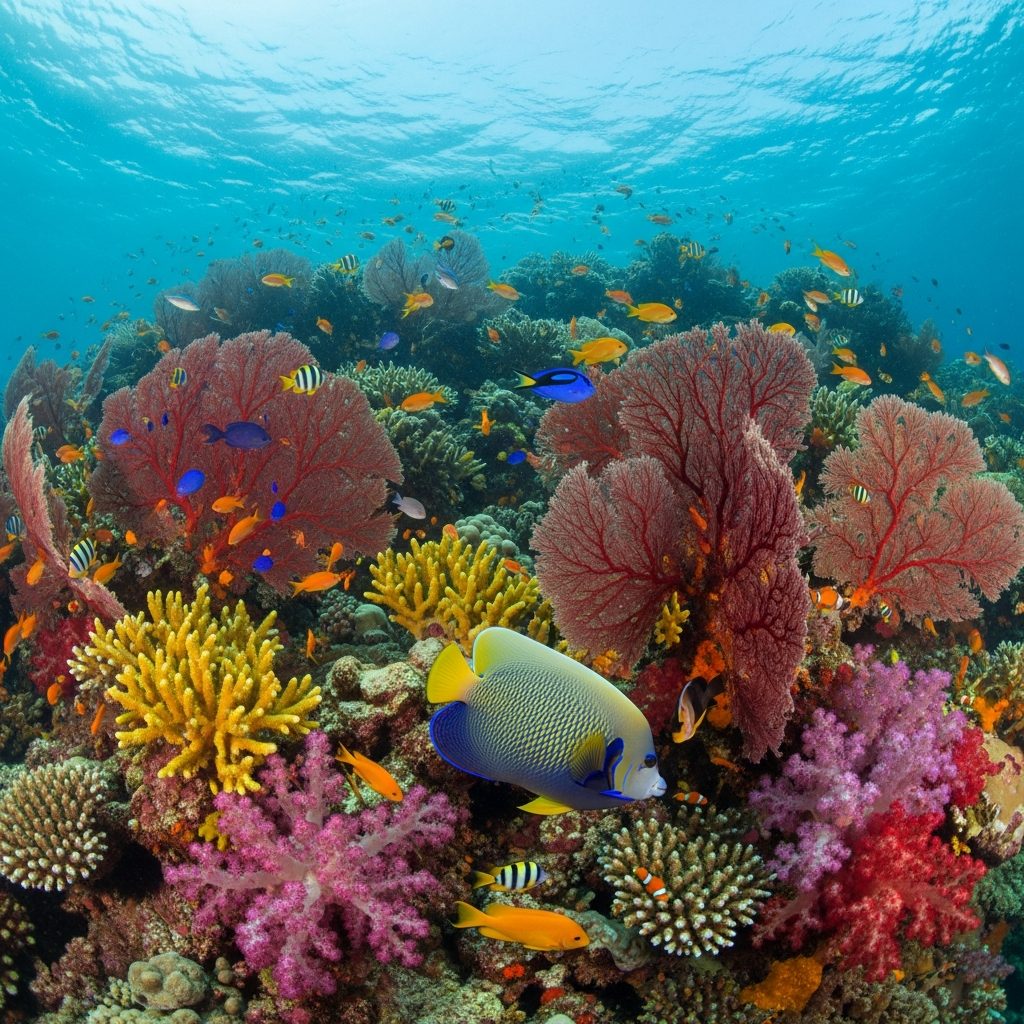
Spectacular Coral Slopes and Walls
Tatawa Island
Tatawa Island offers two distinct diving and snorkeling experiences on its opposite coasts. Tatawa Besar (Big Tatawa) features gentle sloping reefs covered in vibrant soft corals — ideal for all exper
About Tatawa Island
Tatawa Island offers two distinct diving and snorkeling experiences on its opposite coasts. Tatawa Besar (Big Tatawa) features gentle sloping reefs covered in vibrant soft corals — ideal for all experience levels. Tatawa Kecil (Small Tatawa) presents more challenging conditions with strong currents and dramatic coral-covered walls.
The reefs around Tatawa Besar are among the most photogenic in Komodo, with dense soft coral coverage in every color imaginable — purples, oranges, pinks, yellows, and reds carpet the reef slope. Macro life is exceptional, with nudibranchs, frogfish, pygmy seahorses, and ornate ghost pipefish rewarding careful observers.
Tatawa Kecil is known for its dramatic coral walls and regular sightings of larger marine life including reef sharks, eagle rays, and schools of barracuda. The strong currents here create excellent drift diving conditions for experienced divers, with the possibility of seeing manta rays during certain seasons.
Highlights & Activities
Natural Beauty
Experience the stunning landscapes and pristine waters that make Tatawa Island a must-visit destination in Komodo National Park.
Marine Life
The waters surrounding Tatawa Island are rich with coral reefs, tropical fish, and frequent encounters with larger marine species.
Liveaboard Access
Best accessed by liveaboard, Tatawa Island is included in our carefully designed sailing itineraries through Komodo.
Photography
From underwater scenes to dramatic landscapes, Tatawa Island offers exceptional photography opportunities for all skill levels.
What to Do at Tatawa Island
The reefs around Tatawa Besar are among the most photogenic in Komodo, with dense soft coral coverage in every color imaginable — purples, oranges, pinks, yellows, and reds carpet the reef slope. Macro life is exceptional, with nudibranchs, frogfish, pygmy seahorses, and ornate ghost pipefish rewarding careful observers.
How to Get to Tatawa Island
Tatawa Island is accessible by liveaboard from Labuan Bajo as part of our Komodo National Park sailing itineraries. Contact our team to include Tatawa Island in your custom itinerary.
Frequently Asked Questions
How do I get to Tatawa Island?
Tatawa Island is best accessed by liveaboard from Labuan Bajo. It is included in many of our standard 2-day, 3-day, and 4-day Komodo itineraries. Contact us to ensure Tatawa Island is part of your sailing route.
What can I do at Tatawa Island?
Activities at Tatawa Island include snorkeling, swimming, photography, and exploring the natural environment. Specific activities vary by location — contact our team for detailed information about what each stop offers.
When is the best time to visit Tatawa Island?
The best time to visit Tatawa Island is during the dry season from April to November, when weather conditions are most favorable and visibility is at its best. However, Komodo can be visited year-round.
Visit Tatawa Island on Your Liveaboard
Include Tatawa Island in your custom Komodo liveaboard itinerary. Contact our team to design the perfect sailing route.
History, Culture & Heritage
Tatawa Island, located within Komodo National Park, remains largely undeveloped and pristine, representing the marine conservation values at the heart of the national park system. The island’s minimal human presence preserves its ecological integrity and natural beauty. The surrounding marine protected areas reflect Indonesian commitment to preserving Southeast Asia’s biodiversity. Traditional Bajo fishing communities nearby maintain ancestral knowledge of these waters and respect local conservation protocols. Island visitation is carefully controlled to balance tourism access with environmental protection. The island represents an opportunity to experience coastal ecosystems in near-pristine condition.
Best Time to Visit
The optimal period for experiencing Tatawa Island is during the dry season from April to December, when sea conditions are calmest and visibility is exceptional. However, each season offers unique advantages. The dry season provides perfect diving conditions with stable weather, while the wet season offers dramatic skies, lower prices, and unique marine encounters. Water temperatures range from 25-29°C year-round, remaining suitable for diving with a 3mm wetsuit. Plan your visit based on your experience level and what marine encounters matter most to you.
Activities & Adventures
Tatawa Island offers some of the region’s best house reef diving with healthy coral gardens accessible directly from the island. The shallow reef provides perfect conditions for beginner and intermediate divers while offering interesting photography opportunities. Snorkeling from the beach reveals vibrant coral systems without requiring certification. Hiking around the island reveals tropical vegetation and elevated viewpoints overlooking surrounding waters. The island’s pristine nature creates peaceful, contemplative experiences away from tourist crowds. Early morning and evening visits offer the best light for photography and wildlife observation. The island’s protected status ensures that your visit supports conservation efforts.
Frequently Asked Questions
Q1: Is Tatawa Island part of Komodo National Park?
Yes, Tatawa Island is located within Komodo National Park boundaries and subject to all park regulations. This protection ensures the island’s pristine character and ecological integrity are maintained for future generations.
Q2: What is the diving difficulty at Tatawa?
The house reef at Tatawa Island offers gentle conditions suitable for divers of all experience levels. Shallow depths, minimal current, and excellent visibility make it perfect for skill practice, macro photography, and relaxed exploration.
Q3: Can you see large marine animals here?
While Tatawa’s protected reefs support abundant small fish and invertebrates, large pelagics are less common than at more exposed sites. However, reef sharks, rays, and large groupers are sometimes encountered. The island excels for macro diving and pristine coral observation.
Q4: What is the best time to dive Tatawa?
Tatawa is diveable year-round with calm conditions and excellent visibility. The protected location means it remains accessible even when rougher sites become unfeasible. Early dives offer excellent light and marine activity before heat peaks.
Q5: Is there camping or overnight accommodation on the island?
No permanent structures exist on Tatawa Island. Overnight stays are not permitted to preserve the island’s pristine ecology. Day visits from anchored liveaboards provide full access to the island’s diving and recreational opportunities.
Q6: What wildlife should I expect?
Marine life includes colorful reef fish, sea turtles, rays, and an abundance of macro invertebrates. Birdwatching opportunities exist with various coastal and ocean birds. Avoid disturbing nesting areas and observe wildlife from respectful distances.
Q7: How long should I spend at Tatawa?
A full day allows 2-3 dives, snorkeling, hiking, and relaxation. However, even 2-3 hour visits provide sufficient time to experience the island’s highlights and enjoy its peaceful character.
Q8: What photography opportunities exist?
The pristine reefs provide exceptional macro and wide-angle photography. The island’s landscape offers scenic shots, especially during sunrise and sunset. Underwater light conditions are excellent for all photography styles.
Nearby Destinations Worth Exploring
While experiencing Tatawa Island, consider exploring these nearby destinations on your liveaboard itinerary. Each offers distinct diving characteristics and unique marine encounters that complement your overall adventure.
Komodo National Park
Tatawa Island sits within Komodo National Park, allowing easy access to the world-class diving sites and dramatic volcanic islands that define the region.
Flores Island
The main island of the region south of Tatawa Island offers additional diving opportunities, traditional villages, and land-based cultural experiences.
Long Pink Beach
Accessible from Tatawa Island by speedboat, Long Pink Beach offers unique snorkeling, the distinctive pink sand beach, and excellent photography opportunities.